Build a stronger, more stable core at home with just a pilates ball — no gym membership required.
Why Pilates Ball Exercises Work
A pilates ball (also called a stability ball or pilates gym ball) creates an unstable surface that forces your deep core muscles — the transverse abdominis, multifidus, and pelvic floor — to engage continuously. Research published in the Journal of Strength and Conditioning shows that ball-based exercises activate 24–38% more core musculature than the same moves performed on a stable surface.
Whether you’re recovering from back pain, looking to strengthen postpartum, or simply want a more challenging home workout, these 10 pilates ball exercises progress from beginner to advanced so you can start wherever feels right for your body.
Choosing the Right Pilates Ball Size
Pilates ball sizes range from 45 cm to 75 cm. When seated on your ball, your hips and knees should form approximately 90-degree angles. Here’s a quick guide:
| Ball Size | Your Height | Best For |
|---|---|---|
| 45 cm | Under 5’0″ | Petite frames, targeted core work |
| 55 cm | 5’0″ – 5’5″ | Most common; general Pilates |
| 65 cm | 5’6″ – 5’11” | Standard gym ball size |
| 75 cm | 6’0″ and above | Taller individuals, desk sitting |
10 Pilates Ball Exercises for Core Strength
1. Ball Crunch
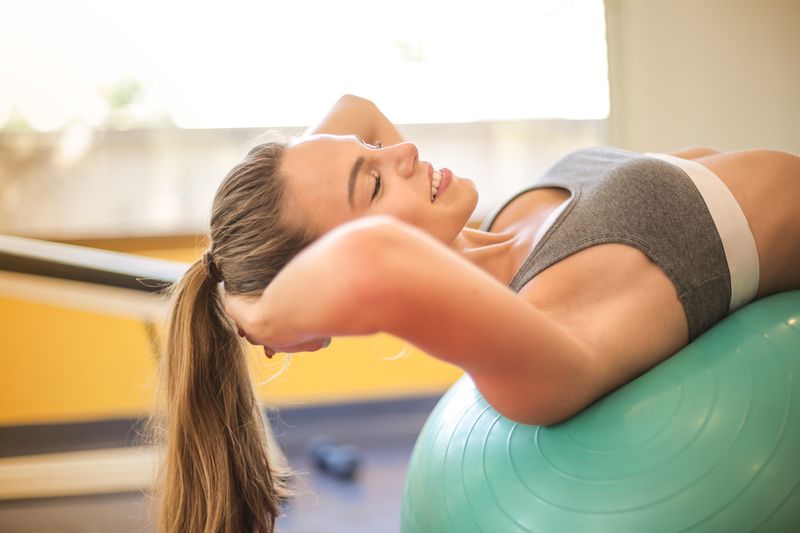
Sit on the ball and walk your feet forward until your lower back is supported. Place hands behind your head, engage your core, and curl your ribcage toward your hips. The ball’s curve allows a greater range of motion than floor crunches, increasing rectus abdominis activation.
3 sets × 15 reps • Beginner
2. Ball Plank
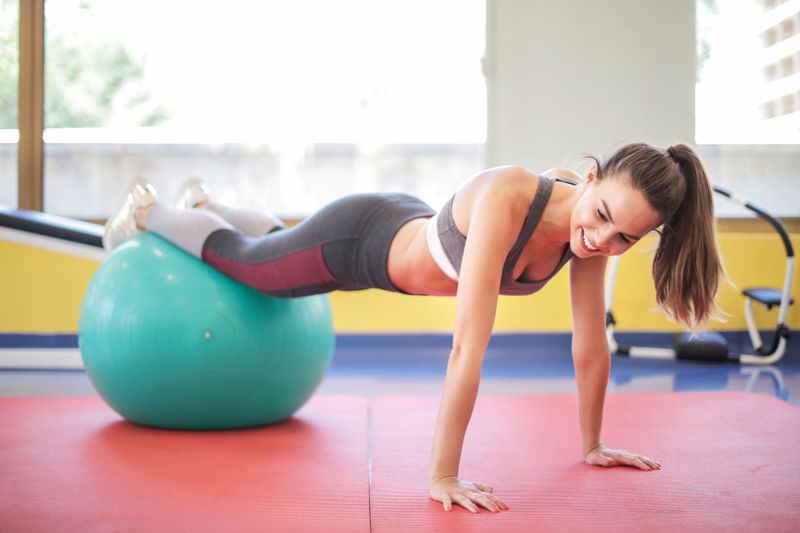
Place your forearms on the ball, extend your legs behind you, and hold a straight line from head to heels. The unstable surface recruits the obliques and deep stabilizers far more than a standard plank. Focus on breathing steadily.
3 sets × 30–45 seconds • Beginner to Intermediate
3. Glute Bridge with Ball
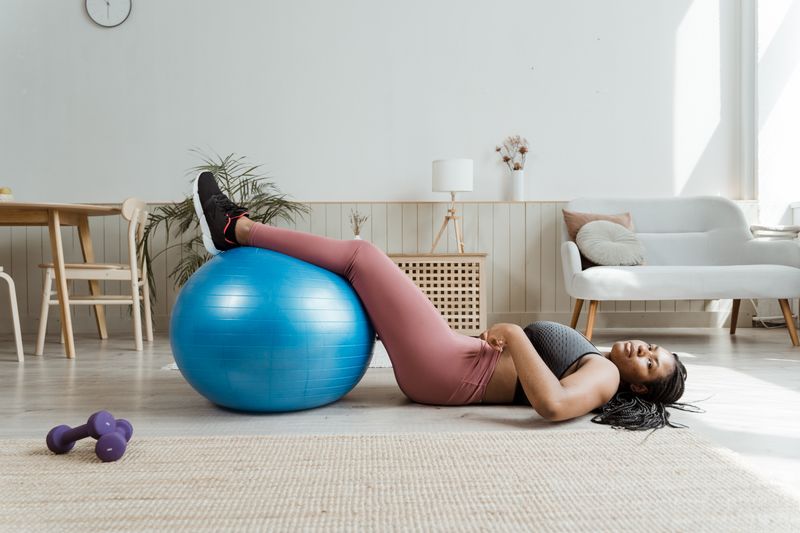
Lie on your back with calves resting on the ball. Press heels into the ball, squeeze glutes, and lift hips until your body forms a straight line. The ball challenges hamstring and core stability simultaneously.
3 sets × 12 reps • Beginner
4. Ball Pass (Dead Bug Variation)
Lie face-up, holding the ball between hands and knees. Simultaneously extend opposite arm and leg while keeping your lower back pressed into the floor. Pass the ball back and forth — this move trains anti-extension and coordination.
3 sets × 10 passes per side • Intermediate
5. Ball Pike
Start in push-up position with shins on the ball. Use your core to pike your hips toward the ceiling, rolling the ball toward your hands. This advanced move targets the entire anterior chain.
3 sets × 8–10 reps • Advanced
6. Prone Ball Roll-Out
Kneel behind the ball with forearms resting on top. Roll the ball forward by extending your arms, then pull back using your abs. Keep hips neutral — don’t let your lower back arch.
3 sets × 10 reps • Intermediate
7. Ball Russian Twist
Lie with upper back on the ball, feet flat on the floor, hips lifted. Extend arms overhead holding hands together and rotate your torso side to side. The ball provides a moving base that intensifies oblique engagement.
3 sets × 12 per side • Intermediate
8. Ball Knee Tuck
From push-up position with shins on the ball, draw your knees toward your chest, rolling the ball forward. Extend back to start. This builds lower abdominal strength and hip flexor control.
3 sets × 12 reps • Intermediate to Advanced
9. Ball Side Crunch
Drape your side over the ball with feet braced against a wall. Place hands behind your head and laterally flex your spine upward. This isolates the obliques through a full range of motion that’s difficult to achieve on a flat surface.
3 sets × 12 per side • Intermediate
10. Ball Jackknife
Start in push-up position with feet on the ball. Keeping legs straight, use your core to pull the ball toward your hands (hips pike high). Slowly return. This is the most challenging move in the sequence — master the pike and knee tuck first.
3 sets × 6–8 reps • Advanced
Safety Tips & FAQs
⚠️ Always inflate your ball to the manufacturer’s recommended size — over-inflation increases burst risk.
✓ Start on a non-slip surface (yoga mat or carpet) until you feel confident with balance.
✓ If you have existing back pain or are postpartum, consult a physiotherapist before beginning these exercises.
✓ Progress gradually — master 3 sets with good form before advancing to the next exercise.
Key Takeaways
Pilates ball exercises are an affordable, space-efficient way to build deep core strength at home. Choose the correct ball size for your height, start with beginner moves (crunches, planks, bridges), and progress to advanced exercises like pikes and jackknives over 4–6 weeks. Consistency matters more than intensity — aim for 3 sessions per week.