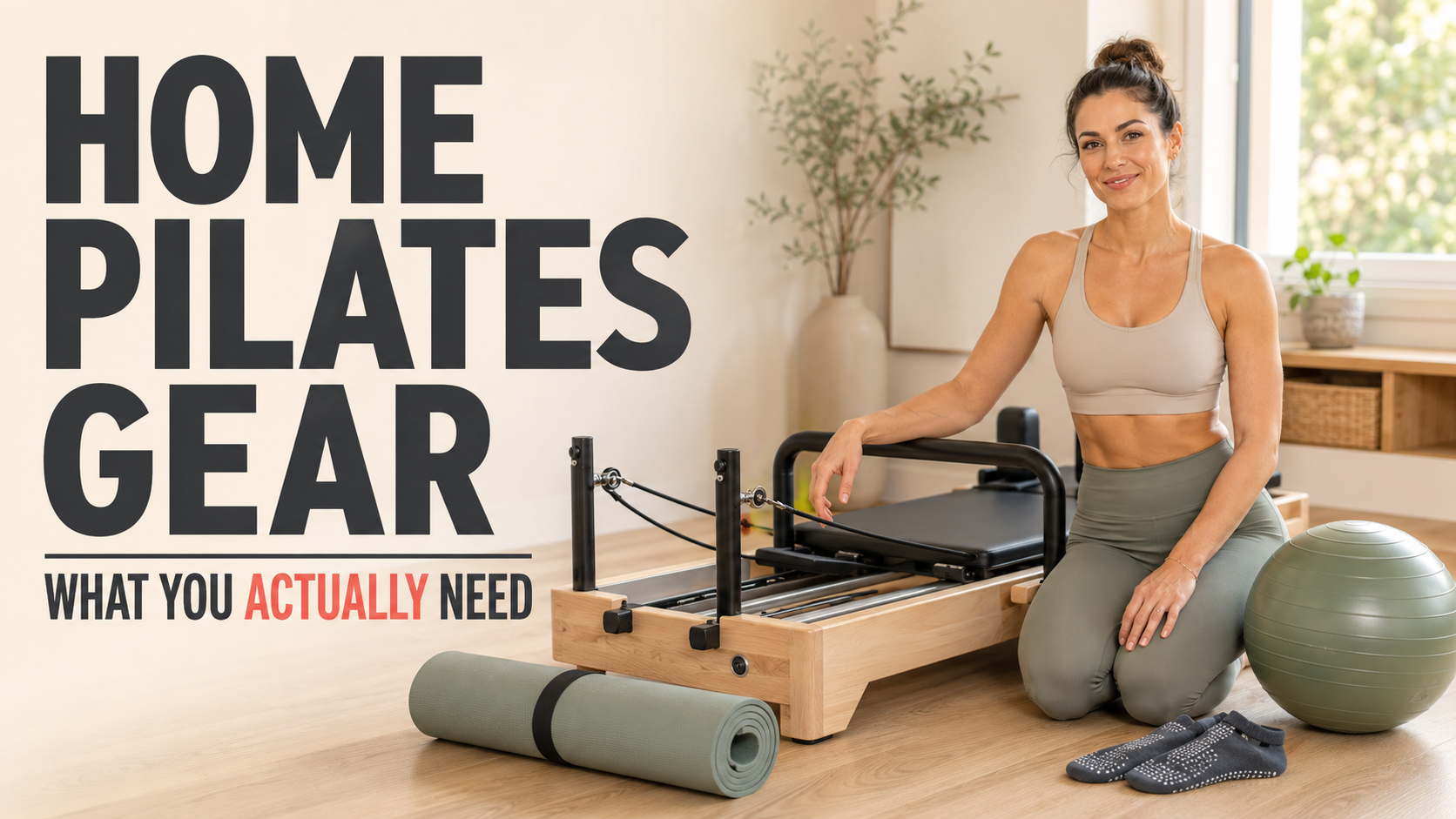
A practical guide to choosing equipment that fits your space, budget, and goals — from someone who’s tested it all at home.
When I first set up my home Pilates space in 2019, I wasted money on equipment I never used. After years of trial and error — and certifying as an instructor — I’ve narrowed down what actually matters for a productive home practice. This guide shares what I recommend to clients like Sarah who want real results without a studio membership.
1. Pilates Reformer: The Gold Standard
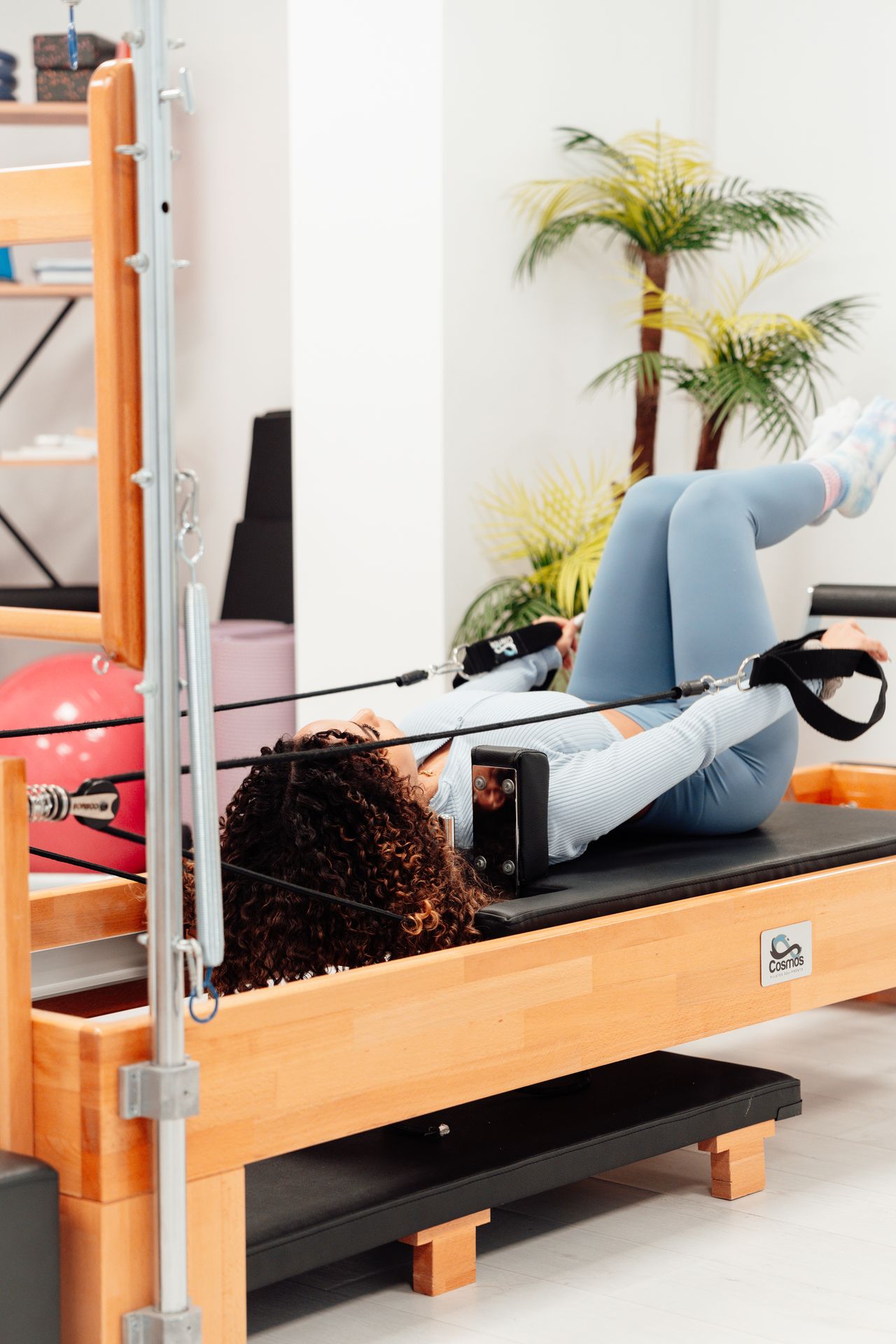
A home reformer is a significant investment ($400–$2,500) but offers the most versatile full-body workout. Look for adjustable spring resistance, a smooth carriage glide, and foldable designs if space is tight. For beginners, a mid-range reformer with 4 springs and a foot bar provides everything you need for the first 2–3 years of practice.
💡 Pro tip from experience: Measure your ceiling height before buying an upright-storage reformer — I learned this the hard way.
2. Pilates Mat: Your Foundation
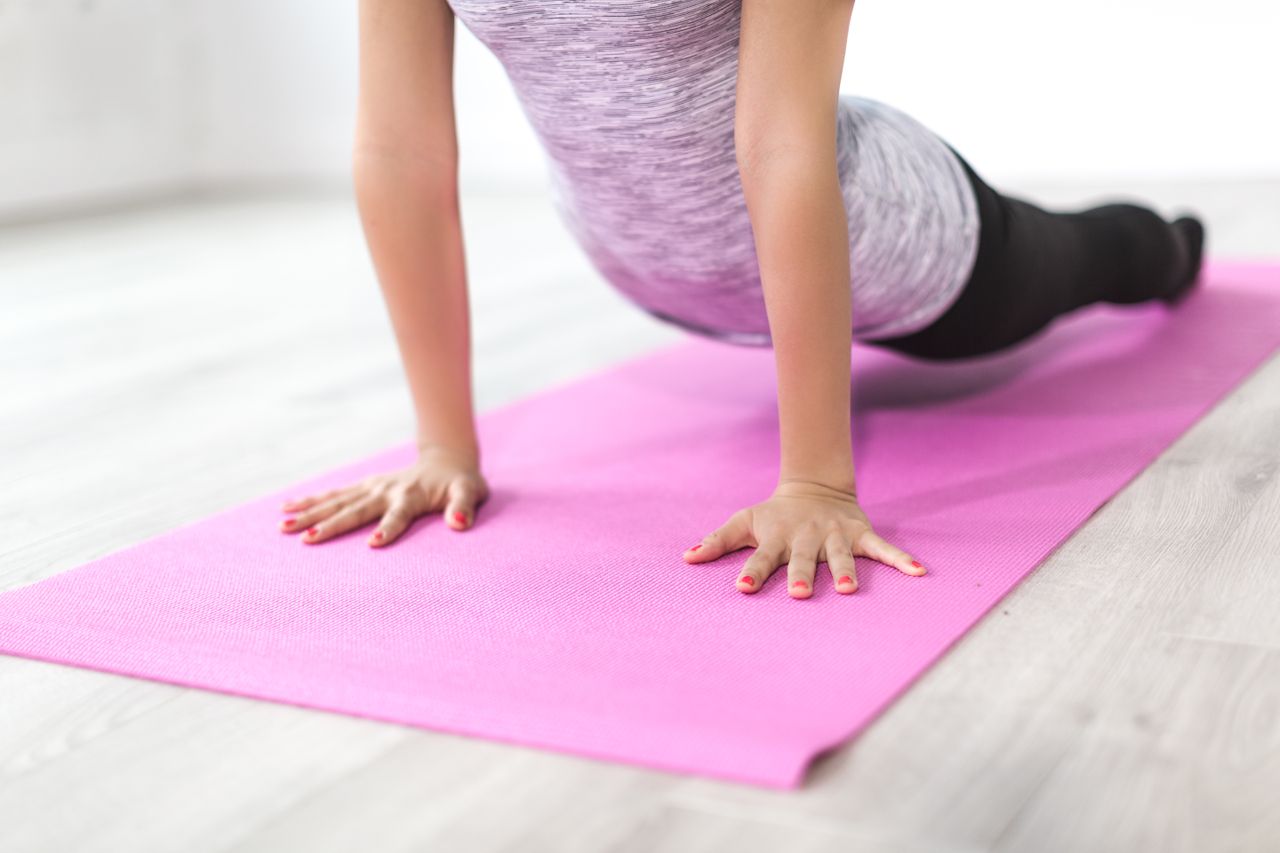
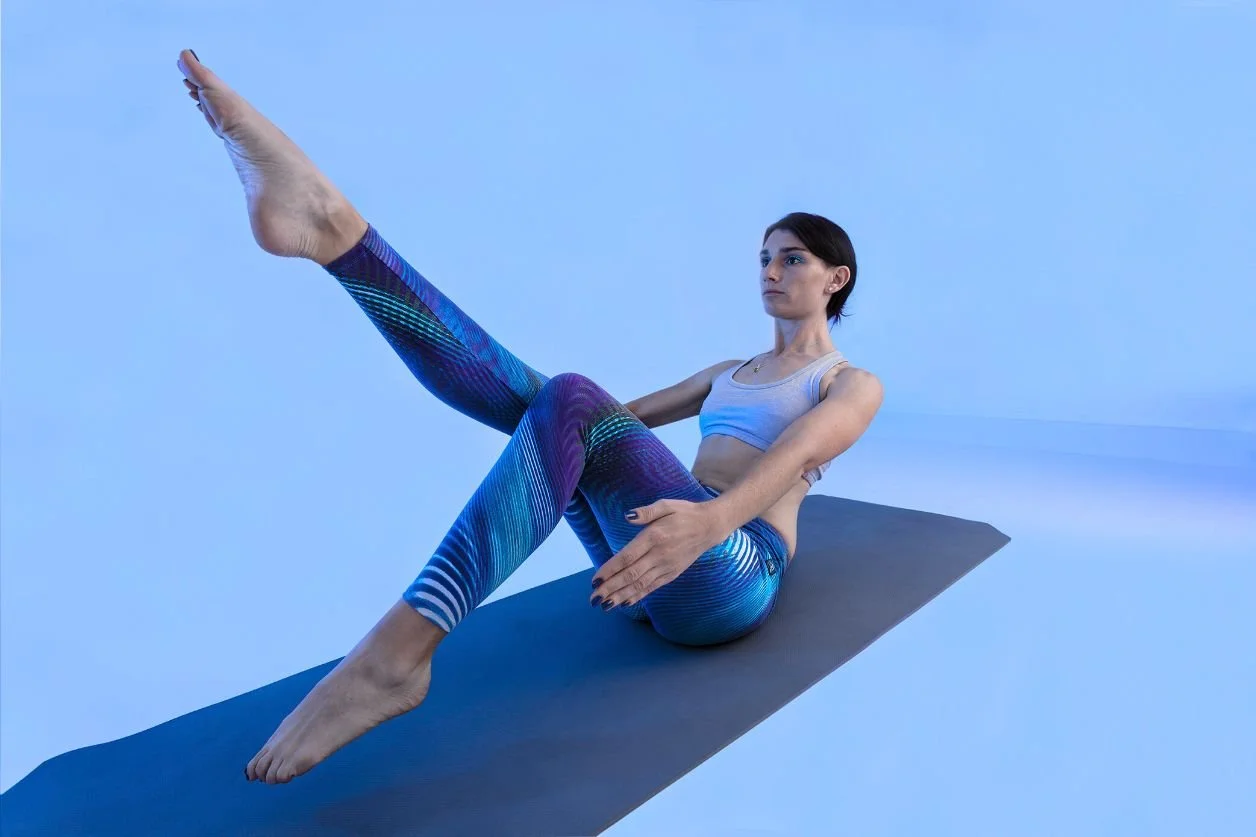
Don’t confuse a yoga mat with a Pilates mat. Pilates mats are thicker (12–15mm) to cushion your spine during roll-ups and supine work. Look for high-density foam that doesn’t bottom out, a non-slip surface, and dimensions at least 180cm × 60cm. Budget $30–$80 for one that lasts years.
💡 I recommend starting here if you’re budget-conscious — mat Pilates alone delivers incredible core strength.
3. Stability Ball: Affordable & Versatile
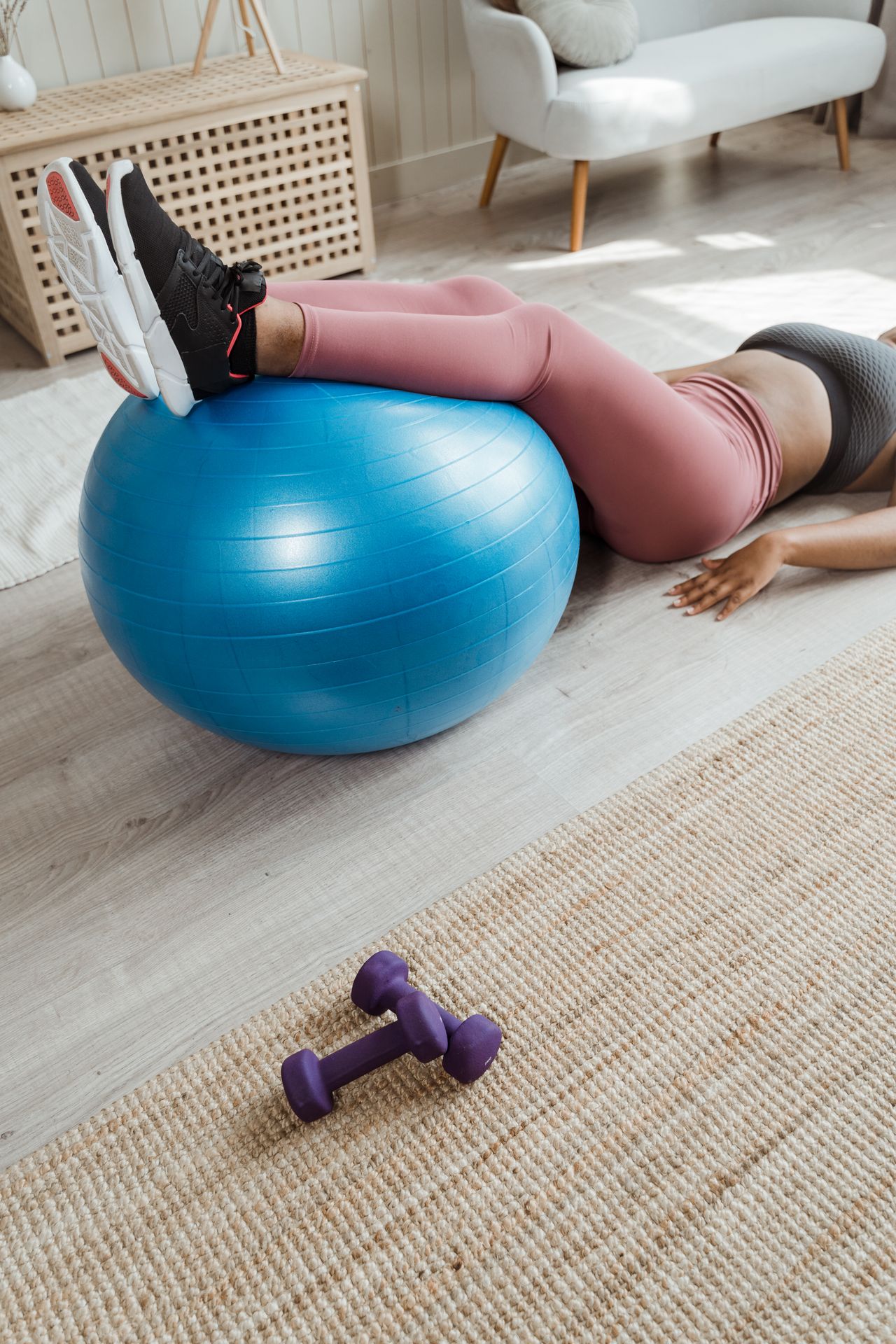
A 55–65cm stability ball (choose based on height) adds an instability challenge that fires up deep stabilisers. Use it for bridges, planks, seated balance work, and even as a desk chair alternative. Anti-burst rated balls from reputable brands cost $15–$40 and last years.
💡 Size guide: If you’re 5’1″–5’7″, go with 55cm. Above 5’8″, choose 65cm.
4. Grip Socks: Small Gear, Big Difference
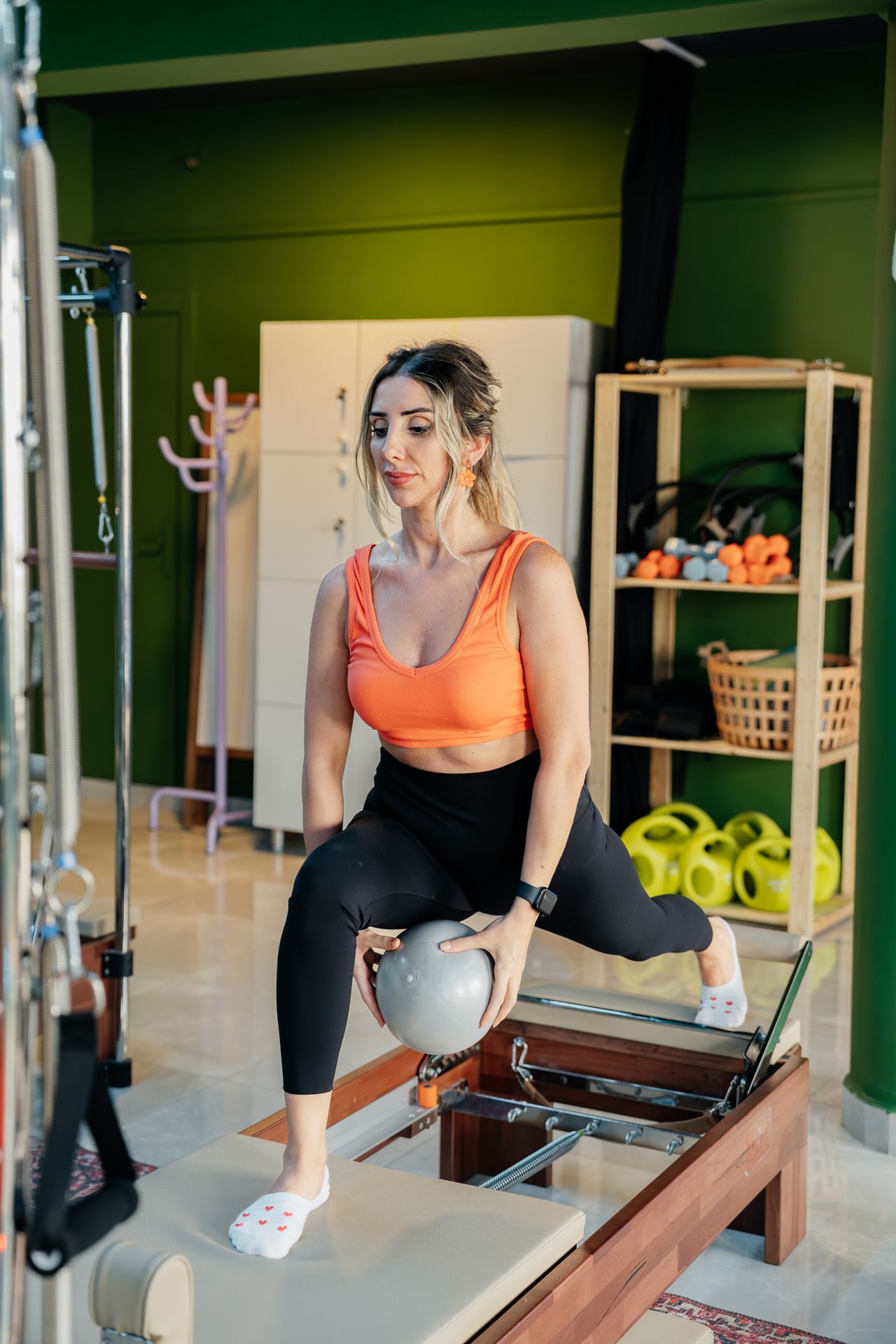
Grip socks prevent slipping on reformers and hardwood floors, protect your feet hygienically, and improve proprioception. Look for silicone dots on the sole, a snug (not tight) fit, and breathable fabric. They’re inexpensive ($8–$20 per pair) and make every session feel safer.
💡 I buy 3–4 pairs and rotate them weekly. Machine-washable is a must.
Frequently Asked Questions
Do I need a reformer to do Pilates at home?
No. Mat Pilates is a complete system on its own. A reformer adds variety and resistance but isn’t essential — especially if you’re just starting out or have limited space.
What’s the minimum budget to start home Pilates?
Around $50–$80 for a quality mat and a pair of grip socks. Add a stability ball for $20 and you have a very capable setup.
How much space do I need for a home reformer?
Plan for at least 250cm × 90cm of clear floor space. Foldable reformers can store upright in about 60cm × 50cm of floor space when not in use.
A practical guide to choosing equipment that fits your space, budget, and goals — from someone who’s tested it all at home.
When I first set up my home Pilates space in 2019, I wasted money on equipment I never used. After years of trial and error — and certifying as an instructor — I’ve narrowed down what actually matters for a productive home practice. This guide shares what I recommend to clients like Sarah who want real results without a studio membership.
1. Pilates Reformer: The Gold Standard
A home reformer is a significant investment ($400–$2,500) but offers the most versatile full-body workout. Look for adjustable spring resistance, a smooth carriage glide, and foldable designs if space is tight. For beginners, a mid-range reformer with 4 springs and a foot bar provides everything you need for the first 2–3 years of practice.
💡 Pro tip from experience: Measure your ceiling height before buying an upright-storage reformer — I learned this the hard way.
2. Pilates Mat: Your Foundation
Don’t confuse a yoga mat with a Pilates mat. Pilates mats are thicker (12–15mm) to cushion your spine during roll-ups and supine work. Look for high-density foam that doesn’t bottom out, a non-slip surface, and dimensions at least 180cm × 60cm. Budget $30–$80 for one that lasts years.
💡 I recommend starting here if you’re budget-conscious — mat Pilates alone delivers incredible core strength.
3. Stability Ball: Affordable & Versatile
A 55–65cm stability ball (choose based on height) adds an instability challenge that fires up deep stabilisers. Use it for bridges, planks, seated balance work, and even as a desk chair alternative. Anti-burst rated balls from reputable brands cost $15–$40 and last years.
💡 Size guide: If you’re 5’1″–5’7″, go with 55cm. Above 5’8″, choose 65cm.
4. Grip Socks: Small Gear, Big Difference
Grip socks prevent slipping on reformers and hardwood floors, protect your feet hygienically, and improve proprioception. Look for silicone dots on the sole, a snug (not tight) fit, and breathable fabric. They’re inexpensive ($8–$20 per pair) and make every session feel safer.
💡 I buy 3–4 pairs and rotate them weekly. Machine-washable is a must.
Frequently Asked Questions
Do I need a reformer to do Pilates at home?
No. Mat Pilates is a complete system on its own. A reformer adds variety and resistance but isn’t essential — especially if you’re just starting out or have limited space.
What’s the minimum budget to start home Pilates?
Around $50–$80 for a quality mat and a pair of grip socks. Add a stability ball for $20 and you have a very capable setup.
How much space do I need for a home reformer?
Plan for at least 250cm × 90cm of clear floor space. Foldable reformers can store upright in about 60cm × 50cm of floor space when not in use.