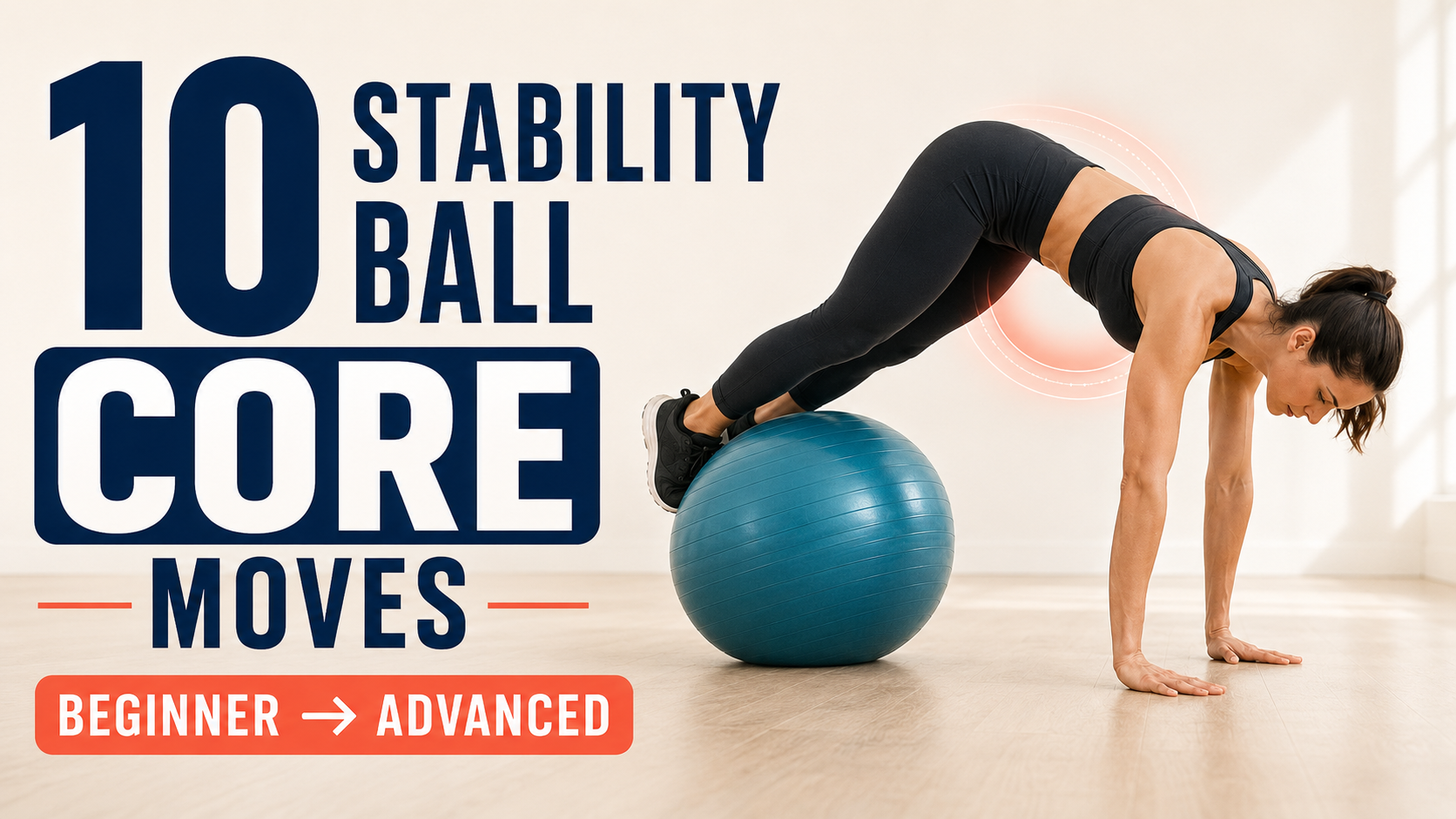
A complete stability ball core routine you can do at home — no reformer, no gym, just you and the ball.
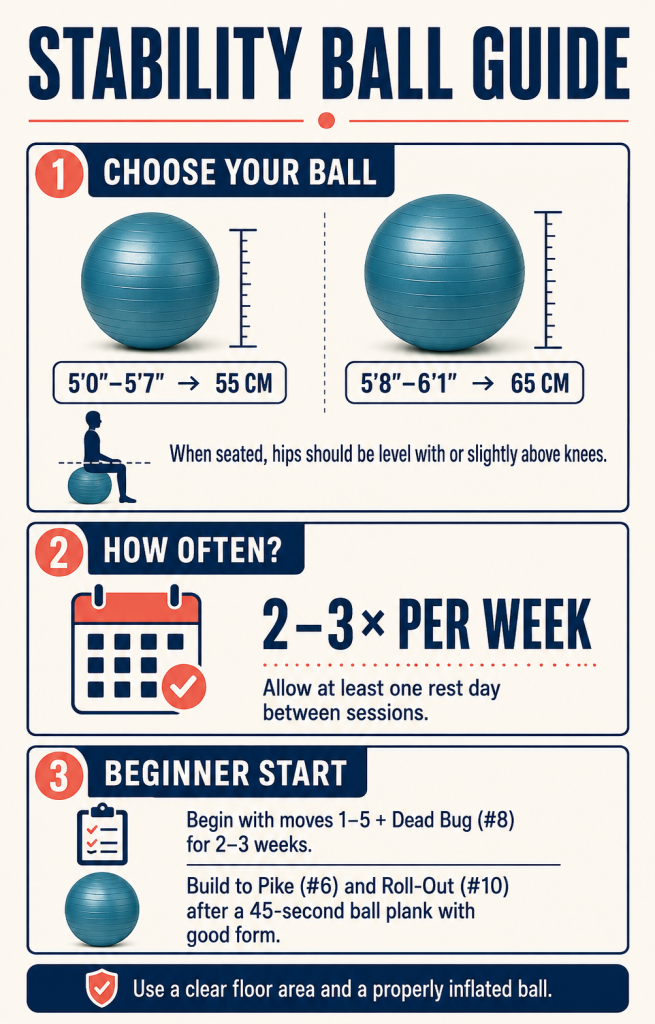
The stability ball is one of the most underrated pieces of Pilates equipment. Its unstable surface forces your deep core stabilisers to fire on every rep — turning simple exercises into serious core challenges. These 10 moves progress from beginner-friendly to advanced, so you can build a routine that grows with you. All you need is a correctly sized ball (55cm if you’re under 5’7″, 65cm if taller) and a clear patch of floor.
1. Ball Crunch
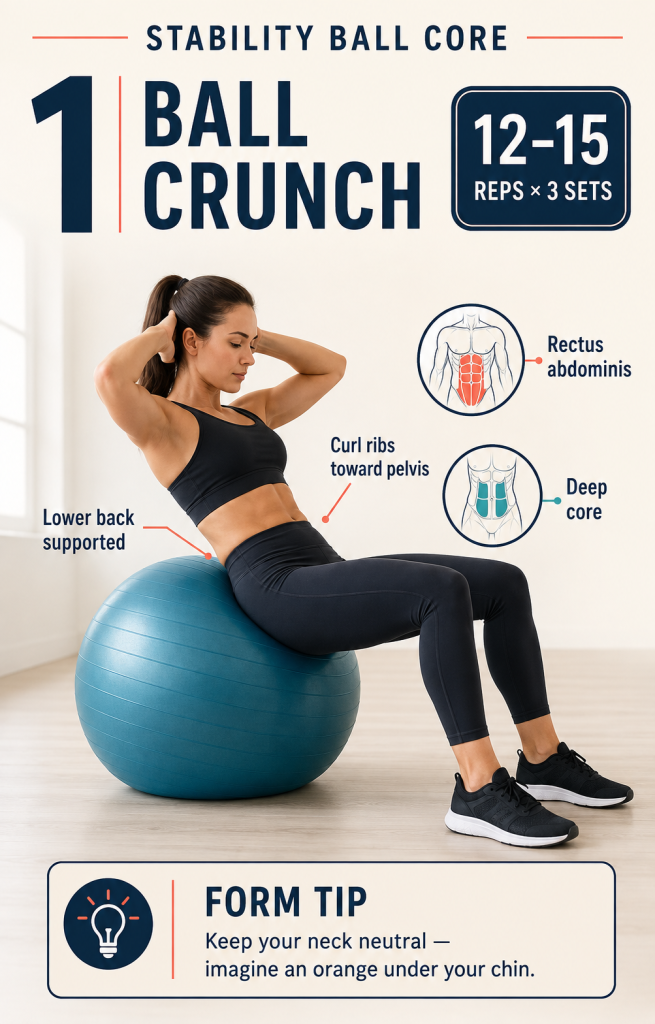
Sit on the ball and walk your feet forward until your lower back is supported. Place hands behind your head, engage your core, and curl your ribcage toward your pelvis. The ball’s curve gives you a greater range of motion than floor crunches, targeting the rectus abdominis more deeply. Perform 12–15 reps for 3 sets.
💡 Keep your neck neutral — imagine holding an orange under your chin.
2. Ball Plank
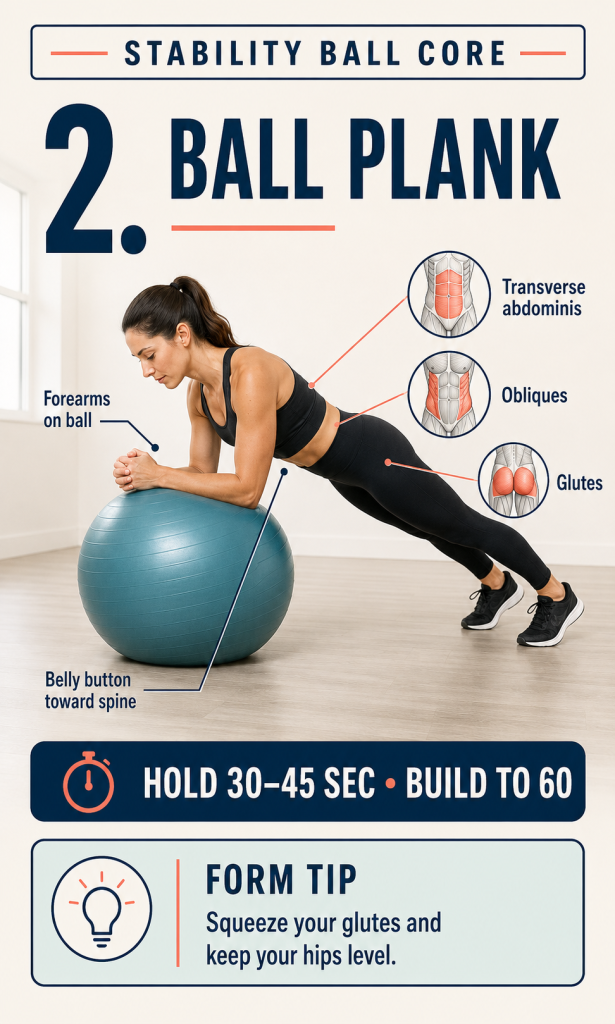
Place your forearms on the ball and extend your legs behind you into a plank position. The instability of the ball forces your transverse abdominis and obliques to work overtime to keep you steady. Hold for 30–45 seconds, building to 60 seconds over time.
💡 Don’t let your hips sag — squeeze your glutes and pull your belly button to your spine.
3. Ball Bridge
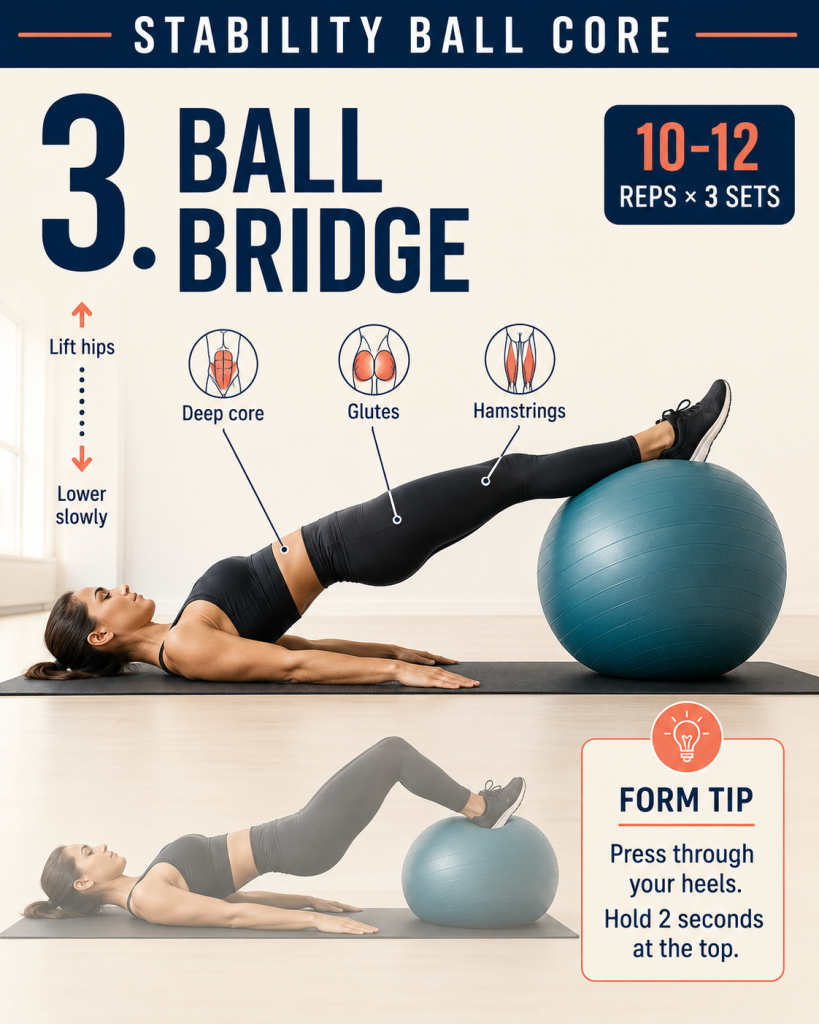
Lie on your back with your heels on top of the ball, arms by your sides. Press through your heels and lift your hips until your body forms a straight line from shoulders to feet. The rolling surface challenges your hamstrings and deep core simultaneously. Hold 2 seconds at the top, lower slowly. 10–12 reps × 3 sets.
💡 For extra challenge, try a single-leg bridge — one foot on the ball, other leg extended to the ceiling.
4. Ball Russian Twist
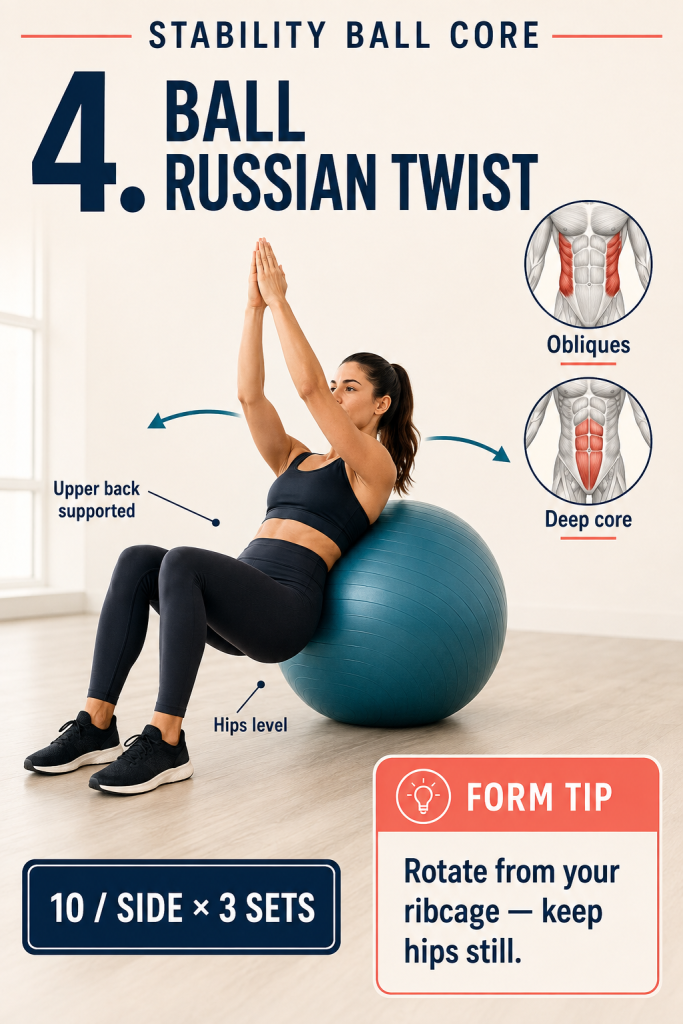
Sit on the ball and walk forward until your upper back rests on it, knees bent at 90°. Extend your arms above your chest with palms together. Rotate your torso to one side, keeping hips level, then rotate to the other. This targets your obliques while the ball trains anti-extension. 10 reps per side × 3 sets.
💡 Move from your ribcage, not your arms — your hips should stay still throughout.
5. Ball Pass (Hand-to-Foot Transfer)
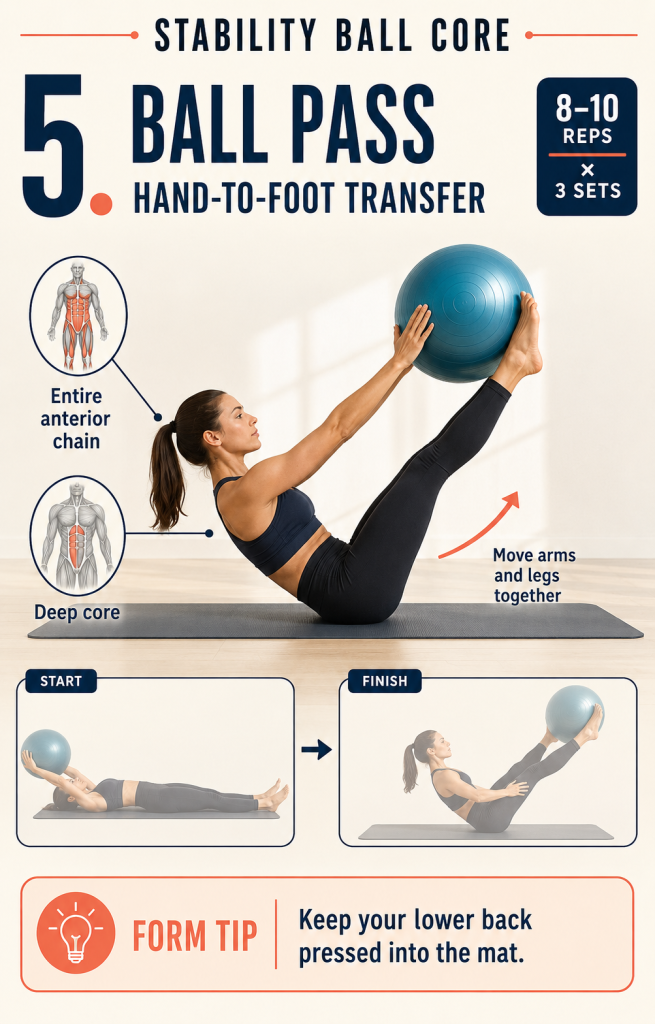
Lie flat holding the ball overhead. Simultaneously lift your arms and legs, passing the ball from hands to feet at the top. Lower everything back down with control, then pass it back on the next rep. This full-body move trains the entire anterior chain and deep core coordination. 8–10 reps × 3 sets.
💡 Keep your lower back pressed into the mat — if it arches, reduce your range of motion.
6. Ball Pike
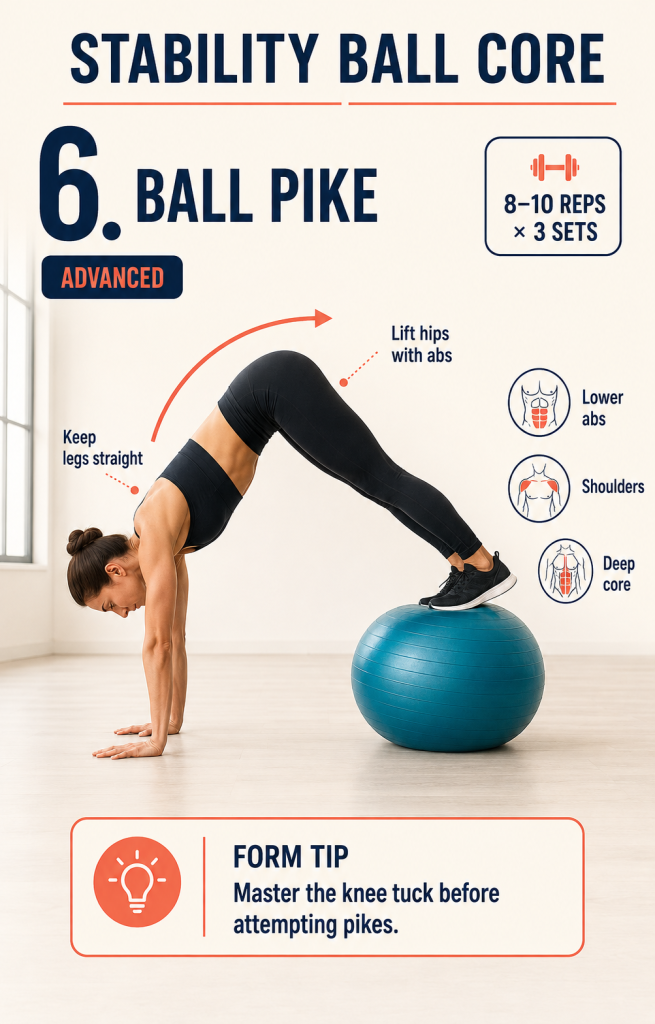
Start in a plank with your shins on the ball. Keeping legs straight, use your abs to pike your hips toward the ceiling, rolling the ball toward your hands. Slowly return to plank. This advanced move demands serious lower-ab strength and shoulder stability. 8–10 reps × 3 sets.
💡 Master the knee tuck (move #7) before attempting pikes — it builds the same pattern with less load.
7. Ball Knee Tuck
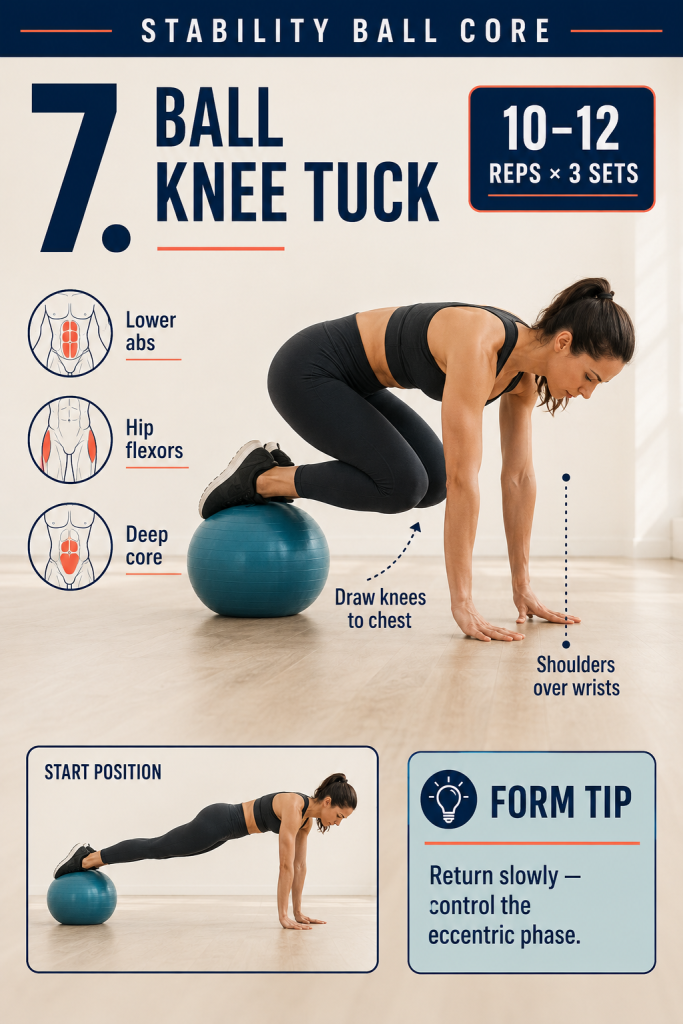
Begin in a plank with the tops of your feet on the ball. Draw your knees toward your chest, rolling the ball forward. Extend back to plank with control. This hits your lower abs and hip flexors while training anti-extension through your lumbar spine. 10–12 reps × 3 sets.
💡 Go slowly on the return — the eccentric phase is where the core works hardest.
8. Ball Dead Bug
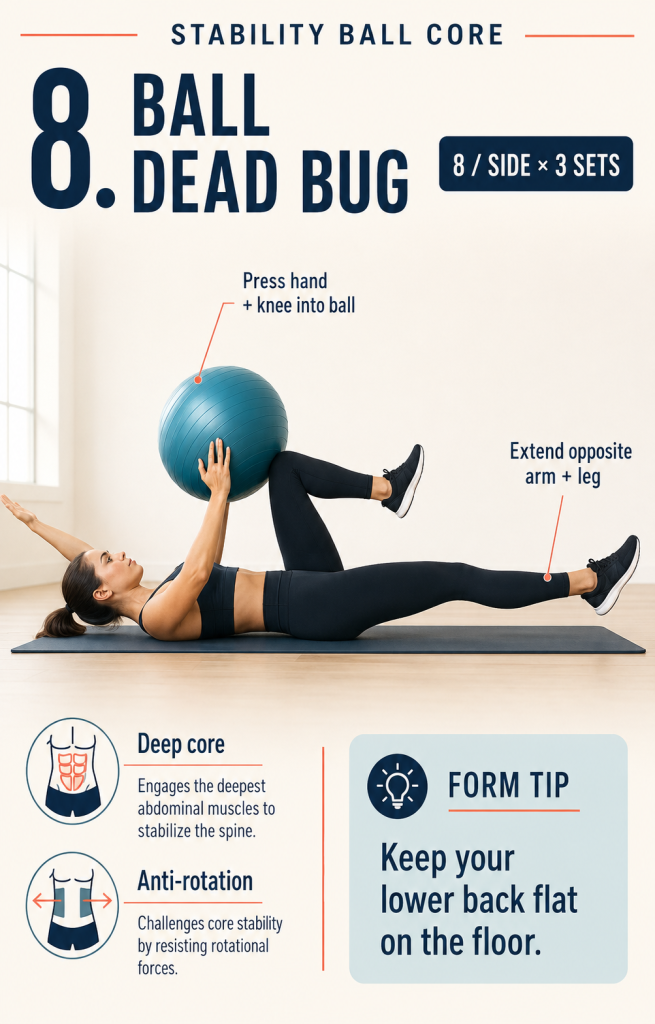
Lie on your back, knees at 90° with the ball squeezed between your hands and knees. Extend one arm overhead while extending the opposite leg, pressing the ball with the remaining hand and knee. Return and switch sides. This anti-rotation exercise trains core stability brilliantly. 8 reps per side × 3 sets.
💡 Your lower back must stay flat on the floor. If it lifts, reduce the range of the extending limbs.
9. Ball Side Crunch
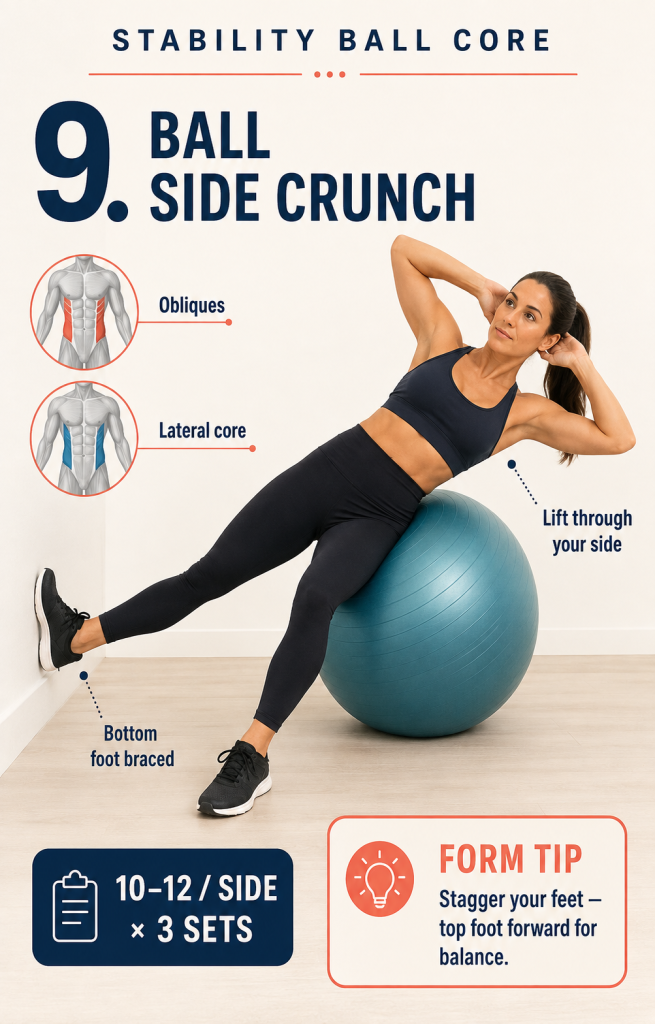
Drape your side over the ball with your bottom foot braced against a wall for stability. Place your hands behind your head and laterally flex your torso up against gravity. This isolates the obliques through a full range of motion that’s impossible on a flat surface. 10–12 reps per side × 3 sets.
💡 Stagger your feet (top foot forward) for better balance on the ball.
10. Ball Roll-Out
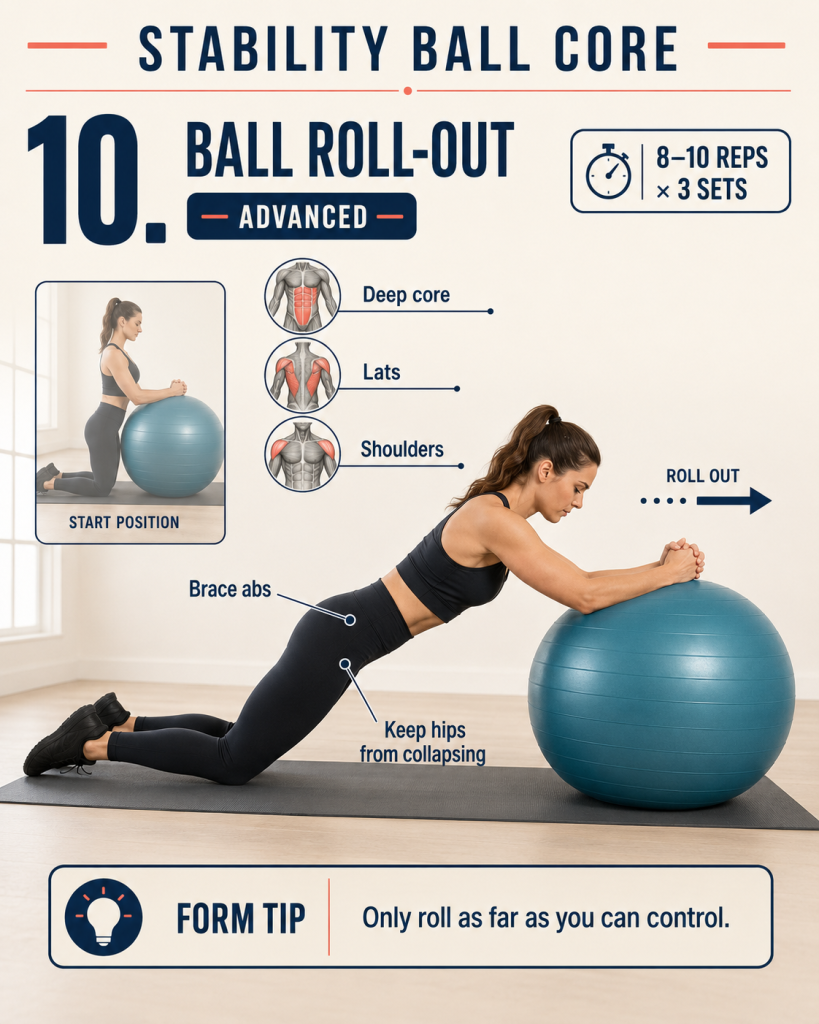
Kneel behind the ball with your forearms resting on top. Slowly roll the ball forward by extending your arms, letting your body lower toward the ground. Use your abs to pull back to the start — don’t let your hips collapse. This is essentially an ab wheel with a forgiving learning curve. 8–10 reps × 3 sets.
💡 Only roll out as far as you can control — form beats range every time.
Frequently Asked Questions
What size stability ball do I need?
If you’re between 5’0″ and 5’7″, choose a 55cm ball. Between 5’8″ and 6’1″, go with 65cm. When seated on the ball, your hips should be slightly above or level with your knees.
How often should I do this routine?
2–3 times per week with at least one rest day between sessions. Your core muscles need recovery time to strengthen. You can split the 10 exercises into two shorter sessions if preferred.
Can beginners do all 10 exercises?
Start with moves 1–5 and the dead bug (#8) for your first 2–3 weeks. The pike (#6) and roll-out (#10) are advanced — build up to them once you can hold a ball plank for 45 seconds with good form.