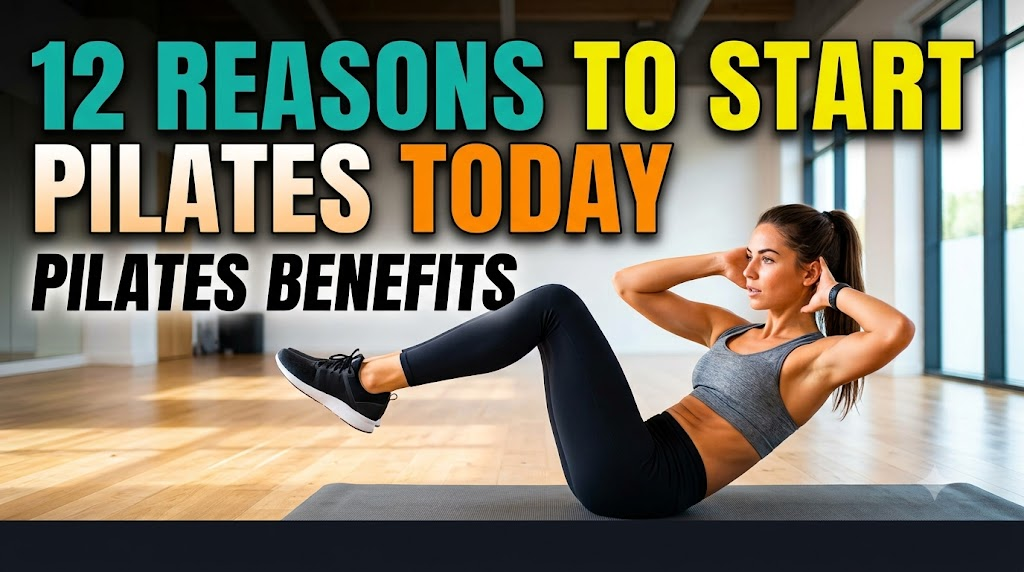
Pilates can help you build a stronger, more mobile body without high-impact workouts. Here is what the method involves, where the evidence is strongest and how to begin with confidence.
What is Pilates?
A low-impact exercise method built around controlled movement, breathing, alignment and core stability.
Best for
Beginners and experienced movers who want strength, posture, mobility, balance and better body awareness.
Pilates benefits at a glance
- Builds core strength
- Supports better posture
- Improves flexibility
- Develops balance
- Builds body awareness
- Offers low-impact training
- Supports functional movement
- May help some back pain
- Encourages focused breathing
- Can support wellbeing
- Adapts to many levels
- Complements other exercise
The foundation
What is Pilates?
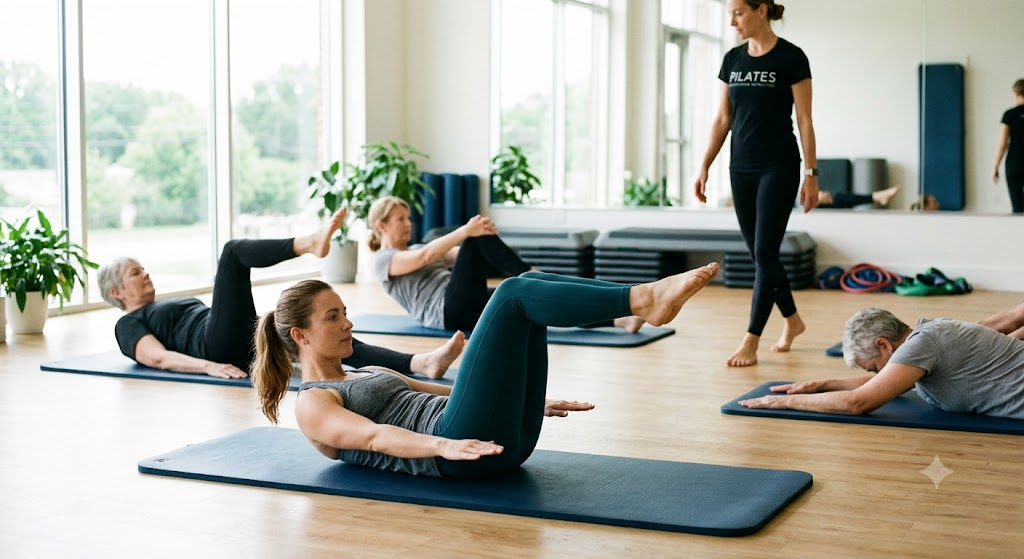
Pilates is a structured form of low-impact exercise developed by Joseph Pilates. It uses precise, controlled movements to train the muscles that support your spine and pelvis while also working your arms and legs. Breathing, concentration and alignment are part of every exercise.
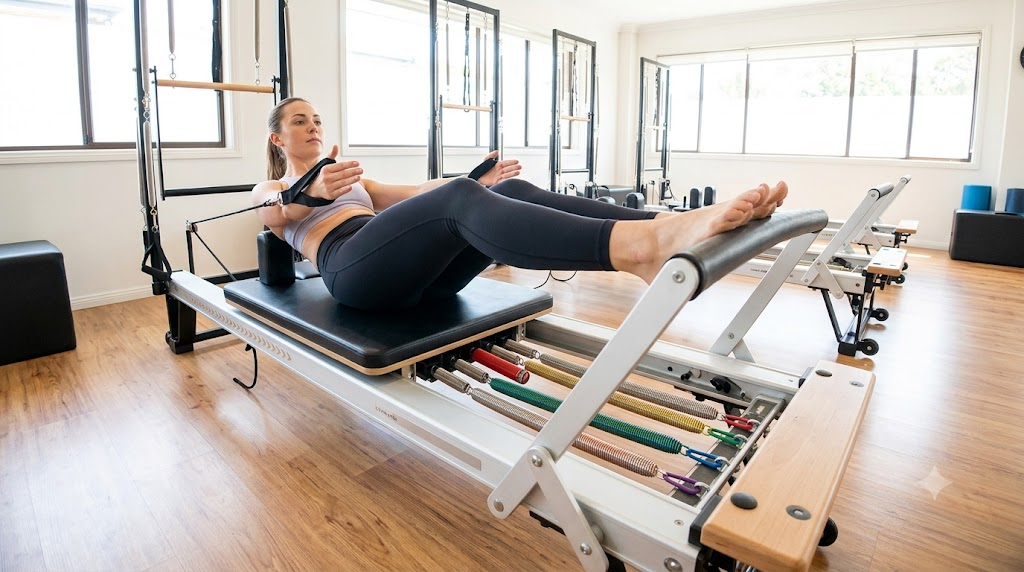
You can practise mat Pilates using your body weight and small props, or reformer Pilates on a spring-based machine. Both follow similar principles. The right choice depends on your budget, access, goals and the level of guidance you prefer.
A realistic promise: Pilates is useful exercise, not a cure-all. Research suggests benefits for several outcomes, but Pilates is not consistently superior to every other form of exercise. The best programme is one you can practise safely and consistently.
12 Pilates benefits for your body and mind
The benefits you notice will depend on your starting point, the type of class you take, your technique and how consistently you practise.
01
Builds deep core strength
Pilates trains the abdominal, back, pelvic-floor and hip muscles that help stabilise your trunk while you move.
02
Supports better posture
Regular attention to spinal position, shoulder placement and pelvic control can help you recognise and improve everyday movement habits.
03
Improves flexibility and mobility
Exercises move joints through controlled ranges while lengthening muscles, helping you develop usable mobility rather than passive flexibility alone.
04
Develops balance
Single-leg work, controlled transitions and trunk stability challenge the systems that help you stay steady.
05
Increases body awareness
Precise cues encourage you to notice breathing, alignment and muscle engagement—skills that can transfer to daily movement and sport.
06
Provides low-impact exercise
Most Pilates movements avoid jumping and heavy impact, making the format approachable for many people who prefer gentler joint loading.
07
Strengthens the whole body
Although famous for core work, a balanced class also challenges your glutes, legs, shoulders, arms and upper back.
08
May help some back pain
Evidence suggests Pilates can help pain and function for some people, although it is not always better than other suitable exercise programmes.
09
Encourages focused breathing
Coordinating breath with movement can make exercise feel more deliberate and help prevent breath-holding during effort.
10
May support mental well being
The combination of movement, concentration and breathing may support mood and quality of life. Research is promising, but individual results vary.
11
Adapts to different abilities
Exercises can be simplified, supported or progressed, allowing a qualified instructor to meet many beginners where they are.
12
Complements other activities
Core control, mobility and movement precision can sit alongside walking, running, strength training or sport rather than replacing them.
Pilates vs yoga: what is the difference?
Pilates and yoga overlap in their focus on breathing, control and body awareness, but they are not the same practice. Neither is automatically better; choose according to the experience and results you want.
| Feature | Pilates | Yoga |
|---|---|---|
| Typical focus | Core stability, controlled strength and alignment | Mobility, held postures, breathing and mind-body practice |
| Movement style | Repeated, precise movements | Poses and flowing sequences |
| Equipment | Mat, small props or reformer | Usually a mat and optional props |
| Best fit | People seeking structured, low-impact strength work | People seeking mobility, breathwork and a broader contemplative tradition |
If your priority is controlled core strength, Pilates may feel more direct. If you enjoy longer holds, flowing sequences or meditation, yoga may suit you. Many people benefit from doing both.
Your first steps
Pilates for beginners: how to start safely
You do not need to be flexible or “fit enough” before your first class. A good beginner session teaches foundations first and offers modifications.
- Choose a beginner-level class.
Look for a qualified instructor who asks about injuries, health conditions and previous exercise experience. - Start with mat or reformer Pilates.
Mat classes are usually more affordable. Reformer classes can offer adjustable resistance and feedback, but neither format is inherently best for everyone. - Prioritise technique.
Move slowly enough to understand the exercise. Quality matters more than range, speed or the number of repetitions. - Build a sustainable routine.
Two sessions a week is a practical starting point for many beginners. Increase gradually if you recover well and enjoy the practice. - Speak up when something hurts.
Muscular effort can feel challenging; sharp, sudden or increasing pain is a reason to stop and ask for guidance.
Before you begin: Speak with a qualified healthcare professional if you are pregnant, recovering from surgery, have osteoporosis, an acute injury, significant back or neck symptoms, or any condition that may affect safe exercise.
Ready to try your first session?
Start with a beginner-friendly class where an instructor can help you learn the fundamentals and adapt each movement to your needs.
Frequently asked questions
How soon will I notice Pilates benefits?
Some people notice better body awareness after a few sessions. Strength, mobility and posture changes generally require consistent practice over time. Your starting point, programme and frequency all matter.
Can Pilates help with weight loss?
Pilates contributes to physical activity and strength, but body-weight change depends on your wider activity, nutrition, sleep, health and energy balance. It should not be marketed as a guaranteed weight-loss method.
Is 20 minutes of Pilates a day enough?
A focused 20-minute session can be useful, especially when it helps you stay consistent. For overall health, combine Pilates with appropriate aerobic activity and other strength work according to professional physical-activity guidance.
Is Pilates suitable for older adults?
It can be. Low-impact movement and adaptable exercises may suit many older adults. An appropriately qualified instructor and healthcare guidance are important when health or mobility conditions are present.